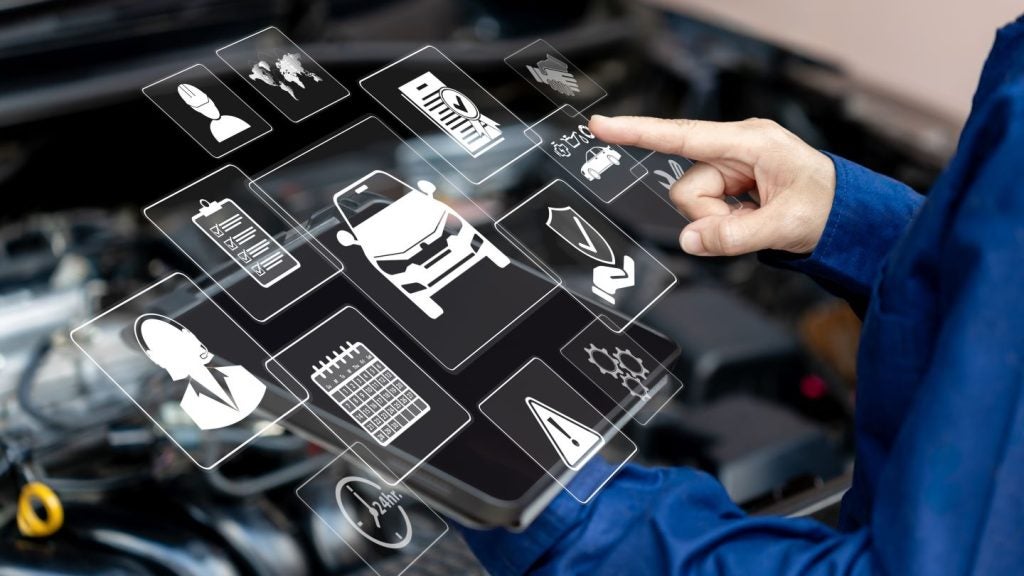
Artificial intelligence has become an unavoidable necessity in the hunt for workplace efficiency. Industries across the world have implemented AI solutions to increase productivity and reduce errors, while developments in machine learning and Big Data have opened the door to an unprecedented insight into customer behaviour and understanding. Chris Lemmon reports.
Experts from the motor finance industry sat down together at the Motor Finance Conference in Munich to discuss how artificial technology has been used in the auto industry, and how companies can use the technology to boost conversion rates.
Go deeper with GlobalData


Access deeper industry intelligence
Experience unmatched clarity with a single platform that combines unique data, AI, and human expertise.
“Nowadays, when we talk about artificial intelligence, it covers a very broad spectrum and is not easily defined,” argued Heidi Bauer, founder and chief executive at fromcash2car.
“AI algorithms have been around for a very long time, but the difference now is we have the data to actually utilise them effectively,” she added.
Bauer believes companies must accommodate customer needs and facilitate the move to a more digital offering, ensuring that the process works effectively.
“I’m all about digital lives,” she continued. “If you have a broken process and you digitise that process, then you will just have a broken digital process. You really need to think about the customer and what the customer really needs, then build a solution based on that.”
US Tariffs are shifting - will you react or anticipate?
Don’t let policy changes catch you off guard. Stay proactive with real-time data and expert analysis.
By GlobalDataAndrew Flegg, head of solution architecture at Alfa, agreed that moving to a more digital-based proposition is the right move, but said there is a common misconception among some companies that the implementation of AI solutions is a daunting and complicated process.
“Change does not have to be scary,” he argued. “There are little things the market can do without complicated transformational projects. There are small wins that can be transformative. Credit decisioning and the gathering of that data, for example, can be done in a matter of weeks. Far smaller and simpler projects like the transcription of calls at customer call centre companies are also an example. This can give us surgical data about the customer and also provide a really good insight into how customers speak when training chatbots.”
The panel touched on the difficulties surrounding the switch to digital, with Luigi-Enrico Tomasini, chief executive and COO at Namirial, noting the various pitfalls that companies must be aware of when digitising in-house processes.
“Generally you are facing technological, organisational and legal challenges,” he said. “You are also facing internal challenges in getting the same understanding across departments. It’s also important to be focused on compliance.”
Building Bridges
The panel moved on to improving the relationship between business and customer, and how a digitised offering can achieve that.
“As much communication with your customers as possible is the ideal scenario,” stated Rupert Pontin, director of valuations at Cazana.
Pontin stressed the importance of using customer data to identify and solve issues before they escalate, adding: “Through the data that is out there, companies are able to see certain aspects of what is happening with the vehicle. There may be indications of hardship for a customer – whether it be through failed MOTs or a plate change on a car with a private plate, which could indicate a customer is about to sell the vehicle.”
Flegg agreed that AI can help to ensure continued customer payments and improve the relationship for the future. “By digging through analytics, businesses can now help the customer before it gets to a point of formal delinquency process or even repossession,” he noted. “Because keeping them as a customer and keeping some form of revenue is obviously a better option in the long term.”
This can also help to develop a level of trust with the customer, which Jörg-M Lenz, director of marketing and communication at Namirial, believes is the key to success in the digital sphere.
“If there is no underlying trust in the process itself, then there will be no digital transformation,” he said. “We need to transfer the trust of the car brand and the car itself, and in the personal relationship with the dealer, into the digital process.
“This is one of the aspects we must assess at the first stage of digital development, rather than just looking at technical possibilities.”
Multichannel Balance
With an increased importance placed on the development of digital services, the panel agreed that companies must not overlook the significance of the dealership.
Tomasini pointed out that over nine in 10 cars are still sold in dealerships – meaning there is still a very long way to go in terms of digital transformation.
“It’s really important to note that the role of the dealer will change,” Tomasini added. “The experience at the dealership will change to make it easier and faster for the customer. It will be more comfortable for the customer, with a focus on experiential activities.”
Bauer agreed that the current dealership setup needs to adapt for the future – with a greater focus on customer needs. “The car-buying process is not as transparent as it should be,” she said. “There should be more education at the forefront to help customers in terms of financial services products that are complex and difficult to understand. If we provide customers with the options and explain them effectively, that could really help.”
Offering an example of how dealerships can incorporate digital features to enhance the in-store experience for customers, Pontin said: “A customer facing the daunting experience of visiting a dealership could utilise a voice search function when entering to help guide them towards the cars they are interested in – closing the analogue-digital gap.”
Paul de Gerlache, senior business expert and project director at Codix, noted the automotive industry is playing catch-up in this regard. “All the systems have to adapt themselves to the new concept which we have already seen for a few years across the IT secto,” he argued.
What Next?
“We live in an age of information and decision overload,” said Bauer, asserting that companies need to reduce the complexity of their services, and curb the number of options available to consumers in order to boost sales.
“Studies show that if you can cut down options, people are actually happier with their decisions. When a customer has too many options, they end up thinking about the ones they could have potentially had.
“A lot of companies in other industries are cutting down on options and have really seen conversion rates improve. The same goes for the auto industry. The industry needs to focus more on being interactive and connected with the customer, and less about a wide range of options.”
With AI technology, companies now have access to a plethora of customer information on buying trends, price expectations, affordability and more. Utilising this data effectively means businesses can streamline the services offered, concentrating on where the real market interest is and what the customer wants.
The general consensus of the panel was that the future of motor finance lies in customer-focused digital transformation. Looking to the future, a successful business will be one that can combine an easy-to-use online proposition with an approachable and experiential in-store offering.