

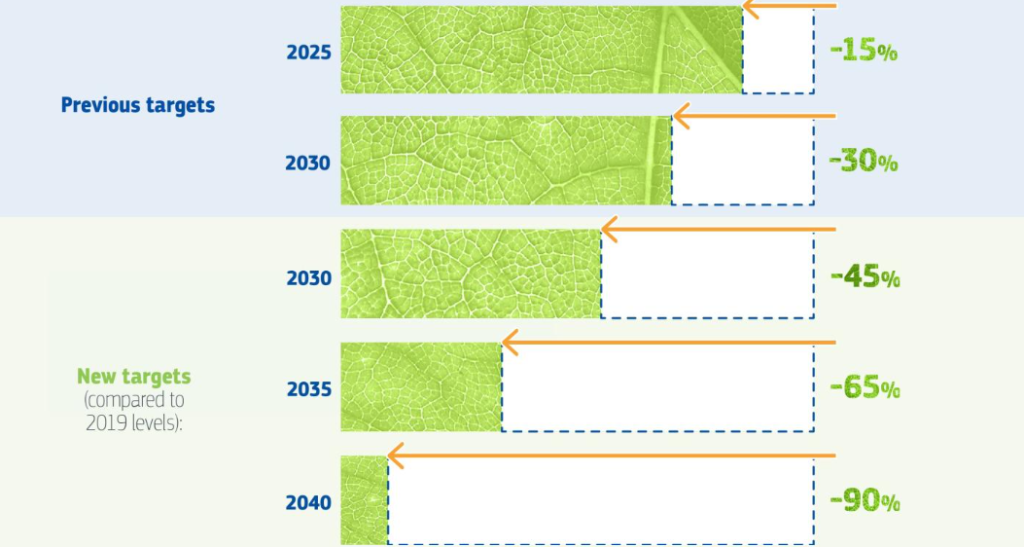
The European Union has reached a deal that will tighten the C02 limits on heavy-duty vehicles, aiming for a 90% reduction in emissions by 2040, compared to 2019.
While this deal is provisional and needs approval from the EU Council and Parliament, the agreement aims to assist the union in its ambitions to achieve carbon neutrality by 2050 and boost zero-emission mobility.
Go deeper with GlobalData


Access deeper industry intelligence
Experience unmatched clarity with a single platform that combines unique data, AI, and human expertise.
“Lorries, buses and coaches are responsible for more than a quarter of GHG emissions from road transport in the EU, and for over 6% of total EU GHG emissions. Despite some improvements in fuel consumption efficiency in recent years, these emissions are still rising, mainly due to increasing road freight traffic”, says the European Commission in a statement.
“To fight the climate crisis, we need to bring down CO2 emissions in this field”, they add.
With this goal in mind, the 90% reduction in emissions by 2040 target will be complemented with intermediate targets for 2030 (45%) and 2035 (65%).
As a central part of the agreement, most heavy-duty vehicles sold in the market, including trucks and coaches, will have to be powered by electric batteries or hydrogen.
Military and emergency vehicles will remain an exception to the rule, reports Reuters.