
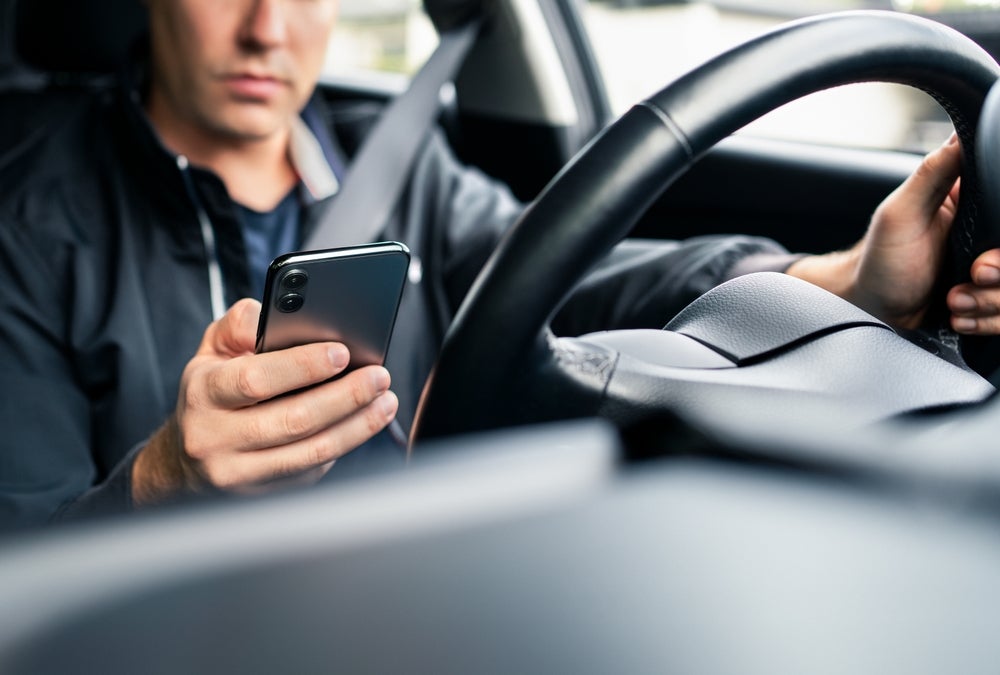
Ohio drivers recorded lower levels of mobile phone interaction while driving than the US average in 2025, according to a company press release from Cambridge Mobile Telematics (CMT).
The telematics provider said its statewide analysis found that drivers in Ohio tapped their phones 7.2% less frequently than the national average over the period January to December 2025. Across the US, drivers averaged 23.6 phone taps per 100 miles, compared with 21.9 in Ohio.

Access deeper industry intelligence
Experience unmatched clarity with a single platform that combines unique data, AI, and human expertise.
The findings are based on data from more than 189 million trips captured through CMT’s safe driving programmes. The company uses smartphone sensors and other in-vehicle devices to identify behaviours such as distracted driving, harsh braking and speeding.
Ohio Governor Mike DeWine said the figures showed drivers were “keeping their eyes on the road more often than the nationwide average”, while adding that any level of distraction still carries risk. He encouraged drivers to continue reducing phone use behind the wheel, according to the press release.
Ohio introduced a hands-free driving law in 2023, making it illegal for drivers to hold or use a mobile phone or electronic device in most circumstances. While hands-free calls remain permitted, CMT reported that handheld call use in Ohio was also below the national average.
According to the study, US drivers spent an average of 0.82% of their driving time on handheld calls in 2025, compared with 0.78% for Ohio drivers, a difference of around 5%.
Colonel Charles A. Jones, superintendent of the Ohio State Highway Patrol, said officers were seeing “the positive impact of this law through fewer crashes”, while noting that enforcement efforts continue, the release said.
Preliminary state data for 2025 shows traffic fatalities in Ohio fell by 3% compared with 2024, marking a fourth consecutive annual decline. The reduction in distracted driving is cited by state officials as a contributing factor, although no causal link has been formally established.
CMT co-founder and chief scientist Sam Madden said the results illustrate how hands-free legislation can be measured using large-scale behavioural data. He said the company’s platform allows road risk to be “quantified” and tracked over time and location.
The analysis also reviewed phone use at county level across Ohio. Ten counties recorded higher-than-average rates for both phone tapping and handheld calls compared with the national benchmark, while others showed consistently lower usage.
CMT said all data used in the study was aggregated and anonymised, with no personally identifiable information collected. Drivers participating in the programmes typically do so through insurers, often in exchange for discounts on motor insurance premiums.
Ohio’s law allows police to stop drivers solely for mobile phone violations. Penalties escalate for repeat offences and are doubled in roadworks zones. Drivers may still use hands-free systems, including voice commands and dashboard mounts.