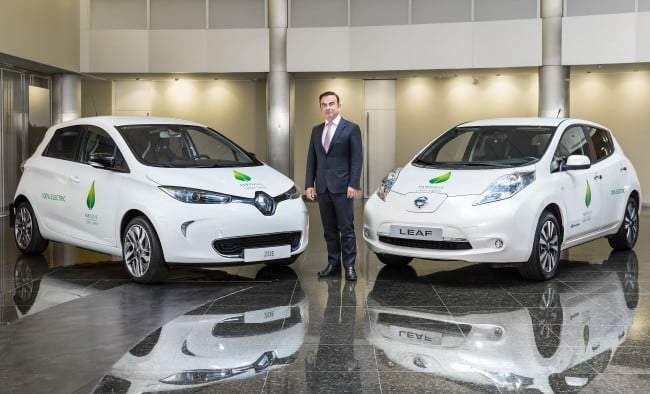
The Renault-Nissan-Mitsubishi Alliance has entered a collaboration with Chinese ride-hailer Didi Chuxing to develop mobility and financial services in the country.
The alliance and Didi signed a memorandum of understanding to jointly develop a an electric vehicle (EV) sharing platform across China, which the alliance said was in line with its research of automated vehicles for ride-hailing. Renault-Nissan plans to release 12 new pure electric models by 2022.
Go deeper with GlobalData

Access deeper industry intelligence
Experience unmatched clarity with a single platform that combines unique data, AI, and human expertise.
Cheng Wei, Didi chief executive, said, “We will empower our partners by providing collaboration aspects ranging from auto leasing and sales, auto finance, auto service, fleet operation to car-sharing solutions. The goal is to create more value for our partners, user community, and the society. ”
Ogi Redzic, senior vice president of connected vehicles and mobility services for Renault-Nissan-Mitsubishi, said: “China is a key market for Renault-Nissan-Mitsubishi and we plan to work in close partnership with market leaders like Didi to shape the future of smart mobility in China.”
Earlier this year, Didi, the biggest e-hail provider in China since its acquisition of Uber’s local operations in 2016, set up a business collaboration with multiple carmakers to develop a supply chain tailored for shared mobility.
“Traditional automakers have different skillsets and understanding of the market, and those are all valuable to us,” Didi general manager Kevin Chen told Reuters on Tuesday.
US Tariffs are shifting - will you react or anticipate?
Don’t let policy changes catch you off guard. Stay proactive with real-time data and expert analysis.
By GlobalData“It’s not like only we understand the customer. We are open to every form of cooperation.”
Renault-Nissan is one of the few non-Chinese OEMs to take part in the alliance.
Foreign brands have mostly relied on partnerships and joint ventures with Chinese players to grow their penetration in the country, in part because of foreign ownership quotas in Chinese firms.
BMW, Geely-owned Volvo and Ford have all partnered with e-commerce giant Alibaba to explore retail and finance opportunities. Groupe PSA recently set up a joint venture with Dongfeng Motors to develop its leasing business.
Earlier this month, the Chinese government stated its intention to open the financial services and carmaking sectors to foreign ownership, potentially allowing western and Japanese carmakers to grow presence in the country on their own.