Toyota has agreed a $500m (€427.4m, £387.7m) investment in Uber and a collaboration on driverless cars development, just two weeks after Uber investors reportedly pressured the American company to drop costly research on autonomous vehicles.
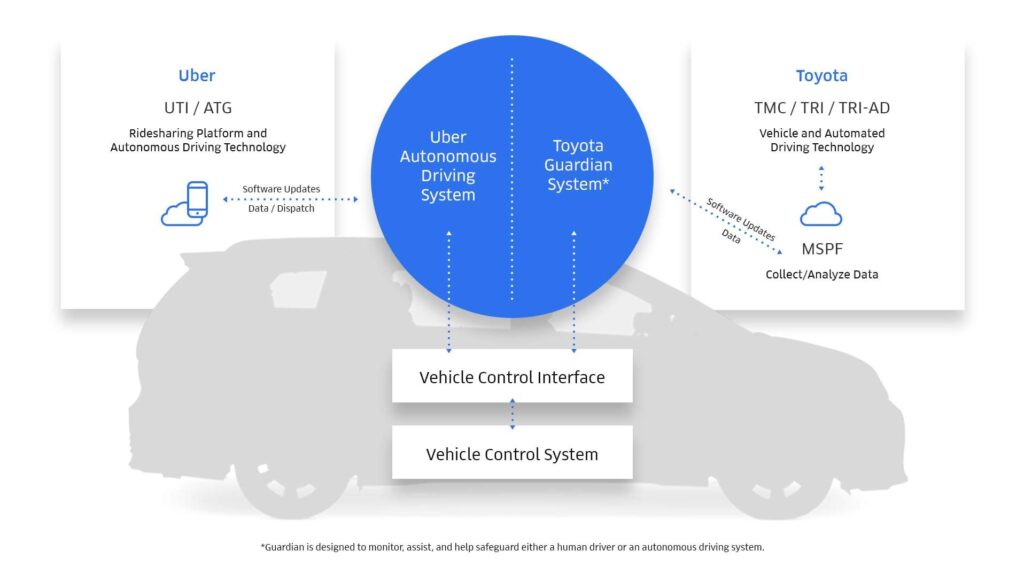
Driverless technology from the two companies will be integrated into a purpose-built autonomous vehicle, based on the Toyota Sienna minivan. Toyota and Uber are looking to start pilots on Uber’s network in 2021, with the fleet being operated by a mutually-agreed third-party – a first for Uber’s collaborations with OEMs.
Go deeper with GlobalData


Access deeper industry intelligence
Experience unmatched clarity with a single platform that combines unique data, AI, and human expertise.
News of the partnership comes two weeks after The Information published reports of brewing discontent among Uber’s shareholders over its autonomous vehicle efforts, estimated to have cost $2bn over the last three years.
The Uber partnership is the second investment by Toyota in a ride-hailing company in just over two months. In June, the Japanese group funnelled $1bn in Singapore-based Grab, the regional incumbent in south-east Asia, potentially providing it with access to a major trove of data to train its own autonomous vehicle algorithms.
The carmaker, widely seen as having the world’s most efficient production apparatus,. is on a recruitment effort for connected and driverless cars, advertising engineering positions for both its Tokyo and London research hubs.
US Tariffs are shifting - will you react or anticipate?
Don’t let policy changes catch you off guard. Stay proactive with real-time data and expert analysis.
By GlobalDataIt is striving not to be left behind by the likes of China’s Didi Chuxing, which can already count a number of European OEMs as partners, as well as Japanese conglomerate SoftBank, also a major backer of Uber and India’s Ola.
Other carmakers are also pursuing a double-pronged strategy on autonomous vehicles, devoting resources to their own research and partnering with non-automotive companies.
Fiat Chrysler has been supplying a fleet of Pacifica minivans to Google’s Waymo – which is now looking for more procurement partners in Europe – while Volvo XC90 SUVs are being used in testing by Uber. Ford, meanwhile, is both a backer for Waymo and a partner of Uber rival Lyft.