
Europe’s new car market posted a sharp downturn in June, with monthly registrations falling by 4.4% year-on-year to 1.25 million units, according to data from JATO Dynamics covering 28 European markets.
The decline was led by steep drops in Italy (-17%), Belgium (-16%), and Germany (-14%), while Romania recorded an alarming 50% fall in volumes.
Go deeper with GlobalData


Access deeper industry intelligence
Experience unmatched clarity with a single platform that combines unique data, AI, and human expertise.
“This is not an isolated dip,” said Felipe Munoz, Global Analyst at JATO Dynamics, a UK-based provider of automotive data, analysis, and intelligence. “Persistently high prices, economic uncertainty, and the long tail of the pandemic are weighing on consumer confidence.” He noted that the region has lost over 2.5 million units in annual sales since 2019.
So far this year, 6.84 million new cars have been registered across the region — 17,728 fewer than in the same period last year, marking a 0.3% year-on-year decline.

Chinese brands surge
As Europe’s overall market contracts, Chinese automakers are gaining ground rapidly. In the first half of 2025, their market share nearly doubled to 5.1% — just shy of Mercedes-Benz (5.2%) and ahead of Ford (3.8%). In June alone, Chinese brands outsold Mercedes.
Driving this growth are five key players: BYD, Jaecoo, Omoda, Leapmotor, and Xpeng. BYD’s aggressive pricing helped it register over 70,500 units in H1 — up 311% year-on-year — with 15,565 units in June alone. Its Seal U plug-in hybrid tied with the Volkswagen Tiguan as the best-selling PHEV last month.
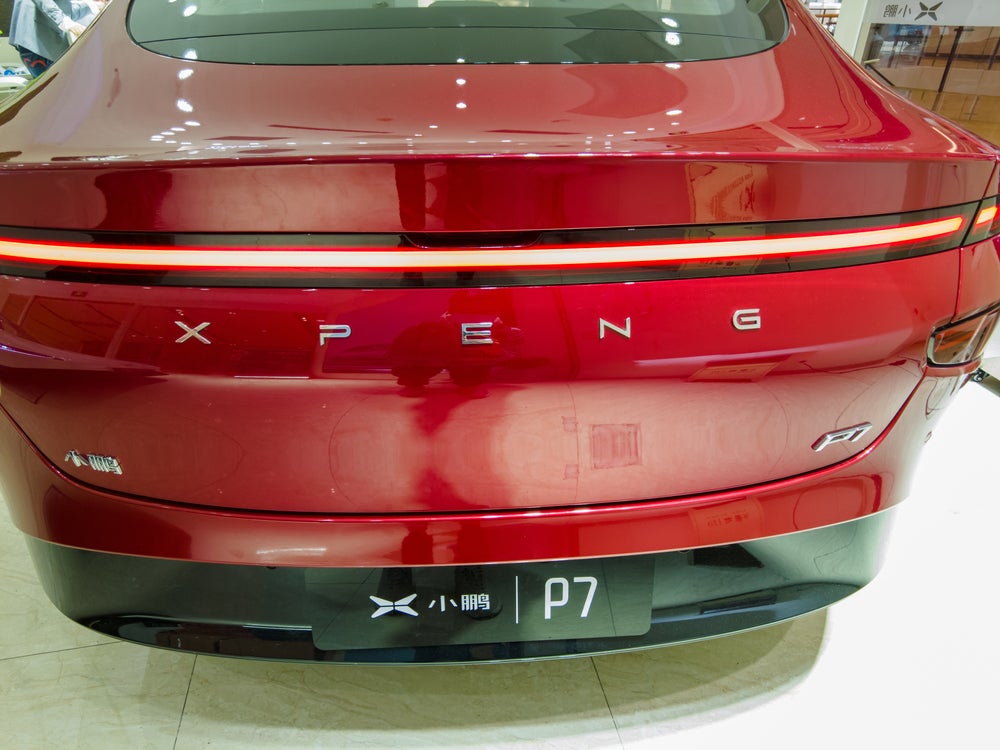
Leapmotor, boosted by strong sales of the T03 and C10, registered more than 8,300 units in June. Meanwhile, Xpeng emerged as the leading high-end Chinese brand, with 8,338 units sold in H1 — most of them G6 SUVs.
Legacy brands struggle
Major players are feeling the heat. Stellantis saw its market share fall to 15.3% in H1, its lowest since the group’s creation in 2021. Registrations dropped by 8.6% in the first half, and 11.7% in June. “Stellantis is suffering from a lack of new models and a heavy reliance on more expensive BEVs,” Munoz said.
Tesla also saw market share shrink, falling from 2.4% in H1 2024 to 1.6% this year — overtaken by SAIC-owned MG. The updated Model Y has yet to deliver a significant sales boost, with registrations up just 0.1% year-on-year in June.
BEVs break one-million barrier
Despite headwinds, battery-electric vehicle (BEV) registrations passed the one-million mark for the first time in H1 — totalling 1.19 million units, up 25% year-on-year. June’s BEV growth, however, slowed to 15%.
BEVs now account for 17.4% of the new car market, led by Norway, Denmark, and the Netherlands. Ford and Volkswagen Group posted strong increases in BEV share, while BYD and SAIC shifted toward other powertrains amid tariff concerns.
Renault dominates model rankings
The Renault Clio topped the sales charts in June with over 27,200 registrations, ahead of the Tesla Model Y. For H1, the Dacia Sandero — also part of Renault Group — took the top spot overall.
Among the fastest-growing models were the MG3 (+258%), Fiat/Abarth 600 (+400%), and Audi A5 (+149%). New entrants like the Renault Symbioz and Jaecoo 7 also made strong debuts, registering 41,730 and 37,700 units respectively.
Europe’s auto market remains under pressure as macroeconomic conditions weigh on consumer demand. Yet, in this uncertain environment, the rise of Chinese brands and the continued growth of BEVs highlight a market in rapid transition. As Munoz put it, “The post-pandemic market reality is taking shape — and it’s a very different landscape from what we knew just a few years ago.”