

The European Commission’s plan to launch a “small affordable cars initiative” could reshape Europe’s entry-level vehicle market and open up fresh demand for auto finance products, BMI – A Fitch Solutions Company suggests.
Announced by European Commission President Ursula von der Leyen on September 12, the initiative would create a new “E-car” category aimed at affordable, lightweight and clean vehicles. BMI says the concept appears inspired by Japan’s Kei car segment, which has a long track record of stimulating both sales and financing volumes in its home market.
Go deeper with GlobalData


Access deeper industry intelligence
Experience unmatched clarity with a single platform that combines unique data, AI, and human expertise.
The announcement precedes upcoming talks between the European Automobile Manufacturers’ Association (ACEA) and EU lawmakers on potential regulatory changes, including exemptions from some costly safety systems and streamlined compliance rules, designed to cut vehicle production costs and lower consumer prices.
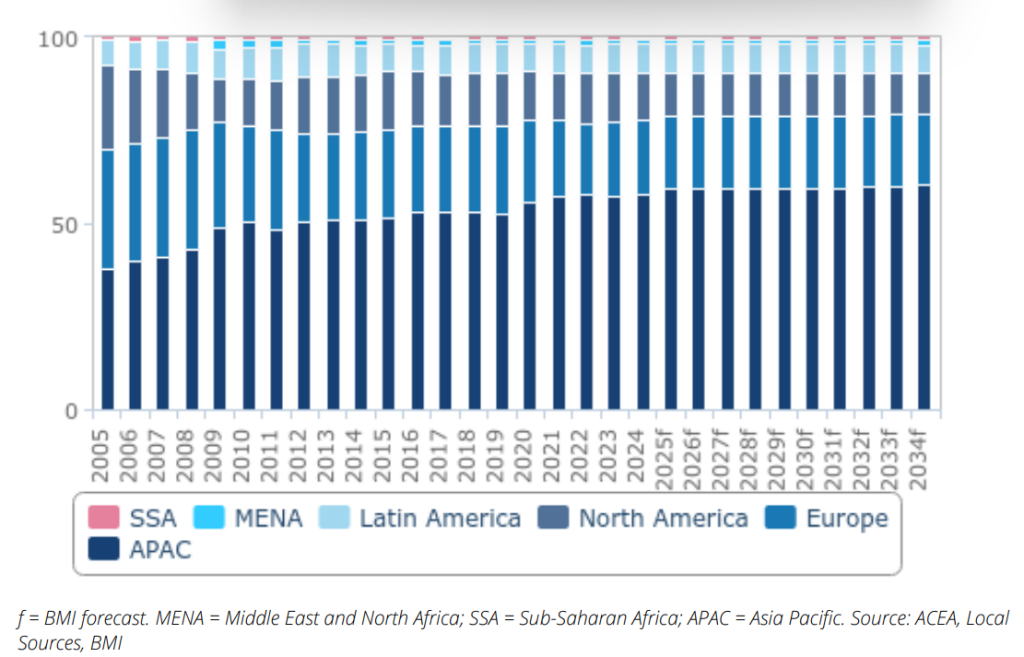
European Auto Manufacturing Share Of Global Output Keeps
Shrinking; Global – Share Of Global Auto Production (%)
Implications for vehicle finance
BMI notes that the initiative could revive the sub-€15,000 segment, a price point that has largely disappeared from the European new-car market, limiting access to affordable credit products. “Should the EU advance concrete plans for the ‘E-car’ category, we anticipate significant upside for both vehicle sales and production, prompting a potential upward revision of our forecasts,” BMI stated.
Currently, BMI forecasts Europe’s vehicle output to grow at an average annual rate of 1.8% between 2025 and 2034, with Europe’s share of global output stabilising at around 18.9% by 2034. However, the company sees “material upside risks” to these projections if the initiative delivers lower-priced vehicles that are easier to finance.
Analysis for lenders and lessors
BMI views the EU proposal as a “positive and necessary step” to revitalise Europe’s underutilised automotive industry and expand affordable mobility options. Lower regulatory costs and size/engine limits would allow OEMs to price models more competitively, widening the pool of potential borrowers and lessees, especially younger or cost-sensitive consumers.
Many industry players have expressed cautious optimism about the initiative, while stressing the need for clarity and concrete measures. Stellantis has welcomed the plan as a way to revive the sub-€15,000 segment, while Renault has called for a differentiated regulatory regime that makes small, affordable cars economically viable. NGOs such as Transport & Environment (T&E) also view the initiative positively, noting that it could correct the market’s current focus on larger, more expensive vehicles, but they emphasise that affordability, environmental standards, and mass-market availability must be ensured.
Overall, stakeholders are urging the EU to define clear technical parameters, timelines, and supporting incentives so that “E-car” models can move from concept to reality.