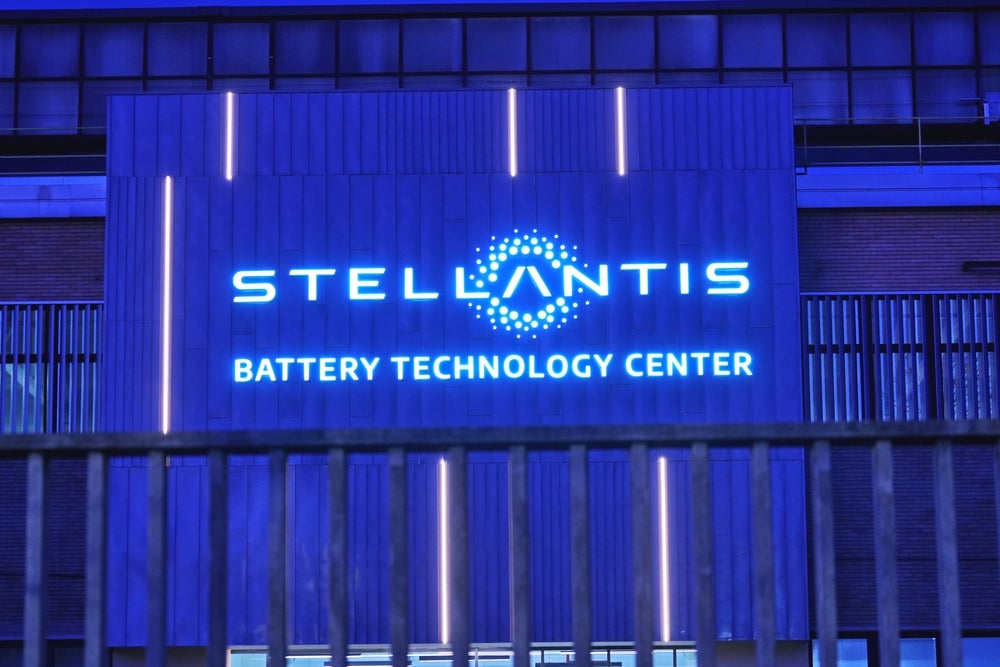
Europe’s dependence on Chinese electric vehicle technology is tightening as battery giant CATL prepares to send 2,000 workers to Spain to build a €4bn plant with Stellantis, the Financial Times reported recently.
The project in Figueruelas, near Zaragoza, underscores both Europe’s reliance on Beijing for critical EV infrastructure and China’s determination to keep control of its intellectual property. CATL, one of the world’s most advanced battery makers, told local officials it would bring in the workers on a rotating basis to construct and fit out the facility, the FT said.
Go deeper with GlobalData


Access deeper industry intelligence
Experience unmatched clarity with a single platform that combines unique data, AI, and human expertise.
The scale of the deployment, which the paper compared to the dispatch of Chinese labour to build infrastructure in Africa, highlights gaps in Europe’s skills base. José Juan Arceiz, a Stellantis employee and union leader, told the FT: “I don’t think the Chinese want to share the know-how with us. That’s one of the reasons why they’re going to bring in 2,000 workers for construction and installation.”
The factory is expected to employ about 3,000 local staff once operational, but concerns remain over whether the EU will gain lasting technological benefits. “Xi is seeking to transform China into a self-sufficient fortress, while making the rest of the world even more dependent on Chinese manufacturing,” said Joris Teer, an analyst at the EU Institute for Security Studies, in comments to the FT.
CATL, which was added to a Pentagon blacklist in January for alleged military links, allegations it denies, is also building a €7bn plant in Hungary. Spain’s Socialist government and opposition conservatives have both endorsed the Zaragoza project, which is receiving €298mn of EU NextGeneration funding.
But critics have warned of risks. Vox regional leader Alejandro Nolasco told the FT: “We’re going to get practically nothing out of it. They’ll take the technology and the money.” Others argued the Spanish car sector had little alternative. “We’d established a leadership position, but the rules of the game changed and now we have to reinvent ourselves,” said Benito Tesier, head of Aragón’s auto industry association, in the FT interview.
Local officials said CATL has been reluctant to share information. Manuela Berges, the mayor of Pedrola (in the province of Zaragoza), told the paper: “They’re obsessed with the threat of industrial espionage.”
The plant is due to start production in 2026 and will make lithium-iron-phosphate batteries. CATL’s Europe general manager, Matt Shen, told the FT the company was ready to “work together” with smaller European battery makers.
Analysts say the project underlines Europe’s reliance on China in an industry where local champion Northvolt has collapsed and where even Volkswagen has turned to Chinese partner Gotion.