
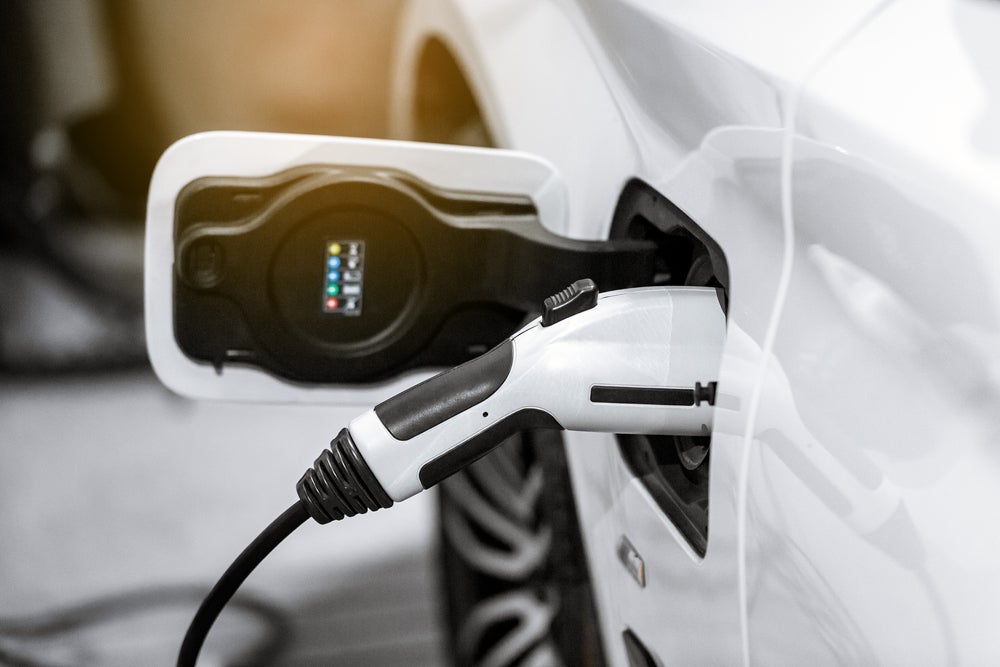
Updated electric vehicle battery health data from Geotab suggests modern EV batteries continue to perform consistently across their operational life, despite a wider use of high-power charging.
The findings were released in a Geotab press release outlining the company’s latest analysis of real-world telematics data.
The updated EV Battery Health Study draws on several years of aggregated information from more than 22,700 electric vehicles across 21 makes and models. Geotab reports an average annual battery degradation rate of 2.3%, compared with 1.8% in its 2024 analysis.
Go deeper with GlobalData


Access deeper industry intelligence
Experience unmatched clarity with a single platform that combines unique data, AI, and human expertise.
Geotab EV Battery Health Report
According to the company, the increase reflects changes in vehicle use rather than underlying battery design, with greater reliance on DC fast charging now a common feature of both fleet and private operation. Battery longevity remains a consideration for fleet operators and finance providers as EV adoption expands across commercial and public-sector use.
DC fast charging, also referred to as rapid or Level 3 charging, supplies power directly to the battery rather than through the vehicle’s onboard AC charger. By bypassing this internal conversion step, higher power levels can be delivered, resulting in shorter charging times.
Charlotte Argue, senior manager of sustainable mobility at Geotab, said the data indicates that battery condition “remains strong” even as charging speeds increase, adding that batteries are “lasting beyond” the replacement cycles typically assumed in fleet planning. She noted that charging behaviour now has a more visible influence on long-term battery health.

US Tariffs are shifting - will you react or anticipate?
Don’t let policy changes catch you off guard. Stay proactive with real-time data and expert analysis.
By GlobalDataThe analysis identifies charging power as the most significant operational factor affecting degradation. Vehicles making frequent use of DC fast charging above 100 kW recorded degradation rates of up to 3.0% per year, compared with around 1.5% for vehicles primarily charged using AC or lower-power options.
Climate was found to have a smaller independent impact. Vehicles operating in hotter regions showed degradation rates around 0.4% per year higher than those in milder conditions.
The data also suggests that strict day-to-day charging limits may be less critical than previously assumed. Vehicles using a wider state-of-charge range did not experience materially higher degradation unless they spent extended periods close to full or empty charge.
Higher-use vehicles showed slightly faster degradation, by around 0.8% per year compared with the lowest-use group. Geotab said this increase is broadly offset by the operational and cost efficiencies associated with higher utilisation, which can reduce lifetime cost per mile.
Argue said fleets should focus on “balance”, pointing out that using the lowest charging power compatible with operational needs can have a measurable effect on long-term battery condition without restricting vehicle availability.
Battery degradation is measured through state of health (SOH), which tracks the gradual reduction in usable capacity over time. A battery begins at 100% SOH; for example, a 60 kWh battery at 80% SOH delivers an effective capacity of 48 kWh.
Geotab said its data shows that, while degradation varies by model, usage and charging behaviour, most modern EV batteries remain suitable for use well beyond typical ownership and replacement cycles. For finance providers, the company argues that access to accurate SOH data through telematics can support more informed residual value, deployment and lifecycle cost assessments.

Frequently asked questions
-
1. What is the expected long-term performance and lifespan of EV batteries?
The average lifespan of EV batteries will be around 13 years or more based on observed degradation rates. Modern electric vehicle (EV) batteries continue to perform strongly. Geotab’s latest analysis shows an average degradation rate of 2.3% per year, affirming long-term battery viability for both individual and fleet use. EV battery degradation varies by model and is also influenced by operating conditions for the vehicle such as charging power, climate and usage
-
2. How has the EV battery degradation rate changed since the last Geotab study?
In Geotab’s 2024 study, the average battery degradation rate was 1.8% per year. In the updated 2026 study, the average battery degradation rate increased to 2.3% per year, based on a larger dataset and shifts in EV usage patterns, particularly an increase in fast charging.
-
3. How is battery health measured and tracked over time?
EV battery degradation is measured by tracking its state of health (SOH), which represents its current usable energy capacity relative to its capacity when new. Geotab calculates current battery capacity by measuring energy input (when charging) and output (when driving), analyzing the battery’s change in state of charge (SOC) during these energy transfers. By measuring these parameters over time, this methodology provides a reliable long-term trend.
-
4. How can fleet managers optimize charging practices to maintain EV battery health?
The most impactful decision within the operator's control is the charging power used. Reserve high-power DC fast charging (DCFC) only for when operational demands require it.