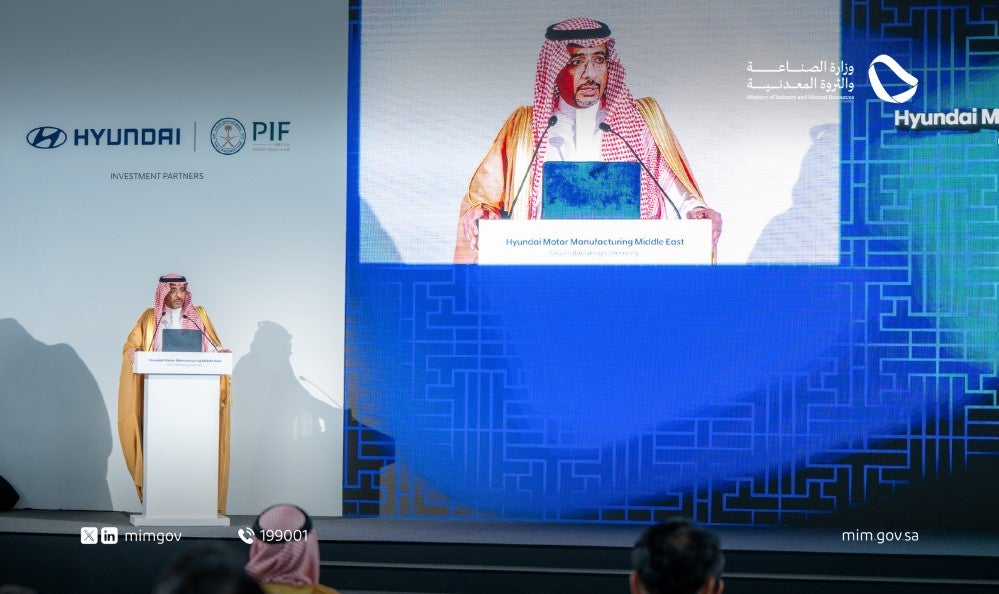
Saudi Arabia’s vehicle financing sector is expected to see significant growth following the announcement that Hyundai Motor Company and the Public Investment Fund (PIF) have begun construction of a new automotive manufacturing facility at the King Salman Automotive Cluster in King Abdullah Economic City.
Structured as a joint venture, with PIF holding a 70% stake and Hyundai the remaining 30%, the plant will have an annual production capacity of 50,000 vehicles, including both internal combustion engine (ICE) and electric vehicles (EVs).
Go deeper with GlobalData


Access deeper industry intelligence
Experience unmatched clarity with a single platform that combines unique data, AI, and human expertise.
The majority of output is expected to serve the domestic market, where Hyundai already maintains one of the largest market shares, particularly in the passenger vehicle segment.
The new production capacity is expected to directly support the expansion of Saudi Arabia’s vehicle financing market, with implications for both retail and fleet finance providers. Analysts expect increased availability of locally manufactured vehicles to improve affordability and lower lead times, enabling lenders to expand consumer credit offerings while also supporting government procurement schemes and leasing models.
According to the Ministry of Industry and Mineral Resources, the facility is part of Saudi Arabia’s broader National Industrial Strategy, which aims to localise production and attract global OEMs. The government’s vehicle localisation drive is aligned with efforts to boost domestic content and reduce reliance on imports—factors that are likely to influence financing structures, pricing models, and risk assessments across the lending market.
The Local Content and Government Procurement Authority is expected to play a key role in supporting demand through large-scale procurement programmes. These may include fleet purchases from public sector entities, creating opportunities for Islamic leasing (ijara) and other structured finance products designed to align with Saudi Arabia’s Vision 2030 localisation targets.
US Tariffs are shifting - will you react or anticipate?
Don’t let policy changes catch you off guard. Stay proactive with real-time data and expert analysis.
By GlobalDataHyundai’s decision to invest in domestic production follows extensive engagement with Saudi stakeholders, including a 2022 memorandum of understanding and a series of 2023 meetings with senior government officials. The plant’s output will also support PIF’s existing automotive investments, including Ceer and Lucid Motors, and is projected to contribute USD 5 billion to the Kingdom’s GDP by 2045.