
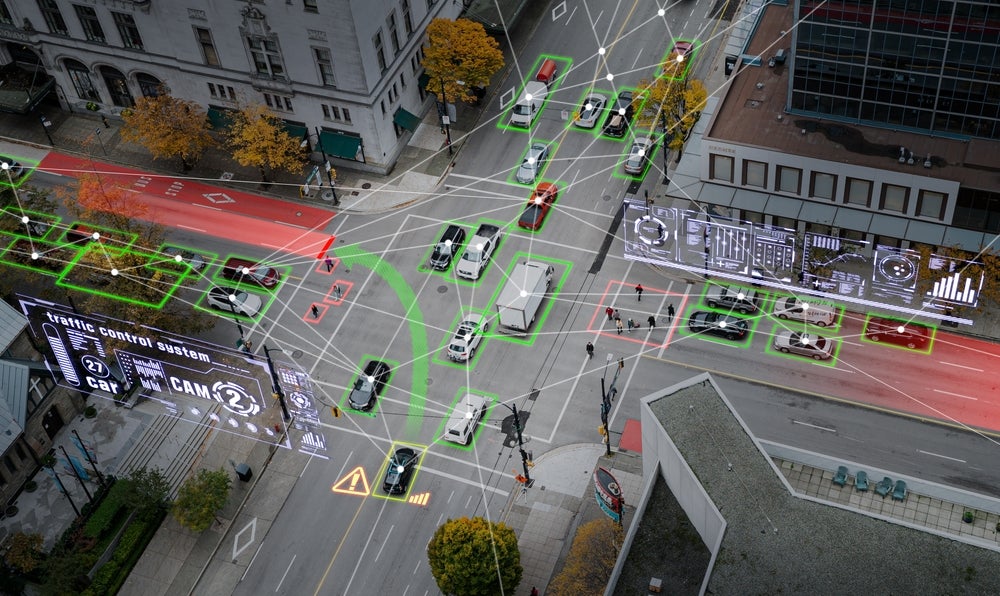
Stellantis has announced a memorandum of understanding (MoU) with NVIDIA, Uber Technologies and Foxconn to explore joint development and future deployment of Level 4 autonomous vehicles for robotaxi services.
The agreement establishes a framework for technology development, licensing, production and vehicle procurement, while allowing each company to pursue other collaborations in the autonomous driving sector. The companies described the arrangement as exploratory and non‑binding.
Go deeper with GlobalData


Access deeper industry intelligence
Experience unmatched clarity with a single platform that combines unique data, AI, and human expertise.
Under the MoU, Stellantis will use its AV‑Ready platforms, specifically the K0 Medium Size Van and STLA Small, as the hardware basis for the project. These platforms are to be integrated with NVIDIA DRIVE AV software running on the NVIDIA DRIVE AGX Hyperion 10 architecture, including the DriveOS operating system and NVIDIA’s full‑stack Level 4 AV software.
Foxconn will focus on hardware and systems integration with Stellantis, and NVIDIA will supply its DRIVE AV stack, including L4 parking and L4 driving capabilities. Uber will be responsible for operating robotaxi services and plans an initial fleet deployment, beginning with 5,000 units and initial operations in the United States. The partners have targeted start of production for 2028, with pilot programmes and testing expected to increase in the intervening years.
Roles and responsibilities are to be split along capabilities: Stellantis will design, engineer and manufacture the vehicles; NVIDIA will provide the autonomous driving software and computing platform; Foxconn will contribute electronics and system integration; and Uber will manage fleet operations and service delivery.
The collaboration aligns vehicle engineering and manufacturing scale with third‑party AI software, system integration and ride‑hail operational expertise. For fleet operators and mobility service providers, the partners highlight an integrated approach intended to address safety, redundancy, sensor and compute integration, and total cost of ownership, factors that influence commercial viability of robotaxi services.
US Tariffs are shifting - will you react or anticipate?
Don’t let policy changes catch you off guard. Stay proactive with real-time data and expert analysis.
By GlobalDataThe MoU complements Stellantis’ recent agreement with Pony.ai to test Level 4 vehicles in Europe; together the initiatives indicate Stellantis’ broader strategy to position its AV‑Ready platforms for multiple passenger and commercial mobility use cases.
Stellantis’ chief executive, Antonio Filosa, said the company has built AV‑Ready platforms to meet growing demand and that the collaboration would “create a scalable solution” to deliver “smarter, safer and more efficient mobility.”
Uber chief executive Dara Khosrowshahi described NVIDIA as “the backbone of the AI era” and said working with Stellantis would help to “bring thousands” of autonomous vehicles to riders through Uber’s platform.
NVIDIA founder and chief executive Jensen Huang framed the initiative in technical terms, saying Level 4 autonomy represents an advance in AI capability and that combining Stellantis’ scale with NVIDIA DRIVE and Foxconn’s integration would enable “a new class of purpose‑built robotaxi fleets.”
Foxconn chairman Young Liu characterised autonomous mobility as a strategic priority for the company’s EV programme and said the partnerships would accelerate deployment by delivering high‑performance compute and sensor integration.
As a non‑binding MoU, the announcement sets out areas for further negotiation rather than binding commitments. Commercial terms, detailed system specifications, regulatory approvals, city‑by‑city deployment plans and procurement agreements remain to be defined.